
When do you actually need a compounding pharmacy?
If you can’t swallow the tablet you’ve been prescribed, the first question to ask your pharmacist is a simple one: “Does this medicine come in another form?”
There might already be a smaller tablet or a liquid. If there’s a suitable version on the market, you may never need a compounding lab. If there isn’t, a compounding pharmacy can look at preparing the medicine in a form or strength that fits your prescription. That’s what we do at Kiwi Pharmacy & Wellness in Kelowna.
One practical point before you reach for a pill crusher: check with your pharmacist about the exact tablet you have. Some tablets can be crushed and some need to stay whole. HealthLink BC has a short guide to swallowing medicines.
What’s the difference between a regular pharmacy and a compounding pharmacy?
Most prescriptions are filled with medicine that arrives from the manufacturer ready to dispense. A pharmacy with a compounding lab can also prepare a medicine for one person when the available strengths, forms or ingredients don’t fit their prescription. At Kiwi, we do both.
Sometimes it’s the strength. You might swallow capsules just fine, but the strength your prescriber wants doesn’t come in a capsule you can buy. In that case the question for the lab is whether it can prepare the prescribed strength. Your pharmacist can check that with your prescriber before the lab starts.
Sometimes it’s another ingredient. A dye in one brand may be the issue. If you know which product you had trouble with, bring the packaging. That gives the pharmacist an ingredient list to work from. Another brand may already leave the dye out. If it doesn’t, the pharmacist can check whether a preparation without that specific ingredient is possible.
In January 2023, we shared how our Kelowna lab helped during shortages of Tylenol and amoxicillin. If your pharmacy is out of your medicine today, start by asking whether they can order more. If the manufacturer can’t supply it and there’s no suitable alternative, your pharmacist can talk with your prescriber about whether compounding is an option. Health Canada explains when a shortage can be a reason to compound.
How are compounded medications made?
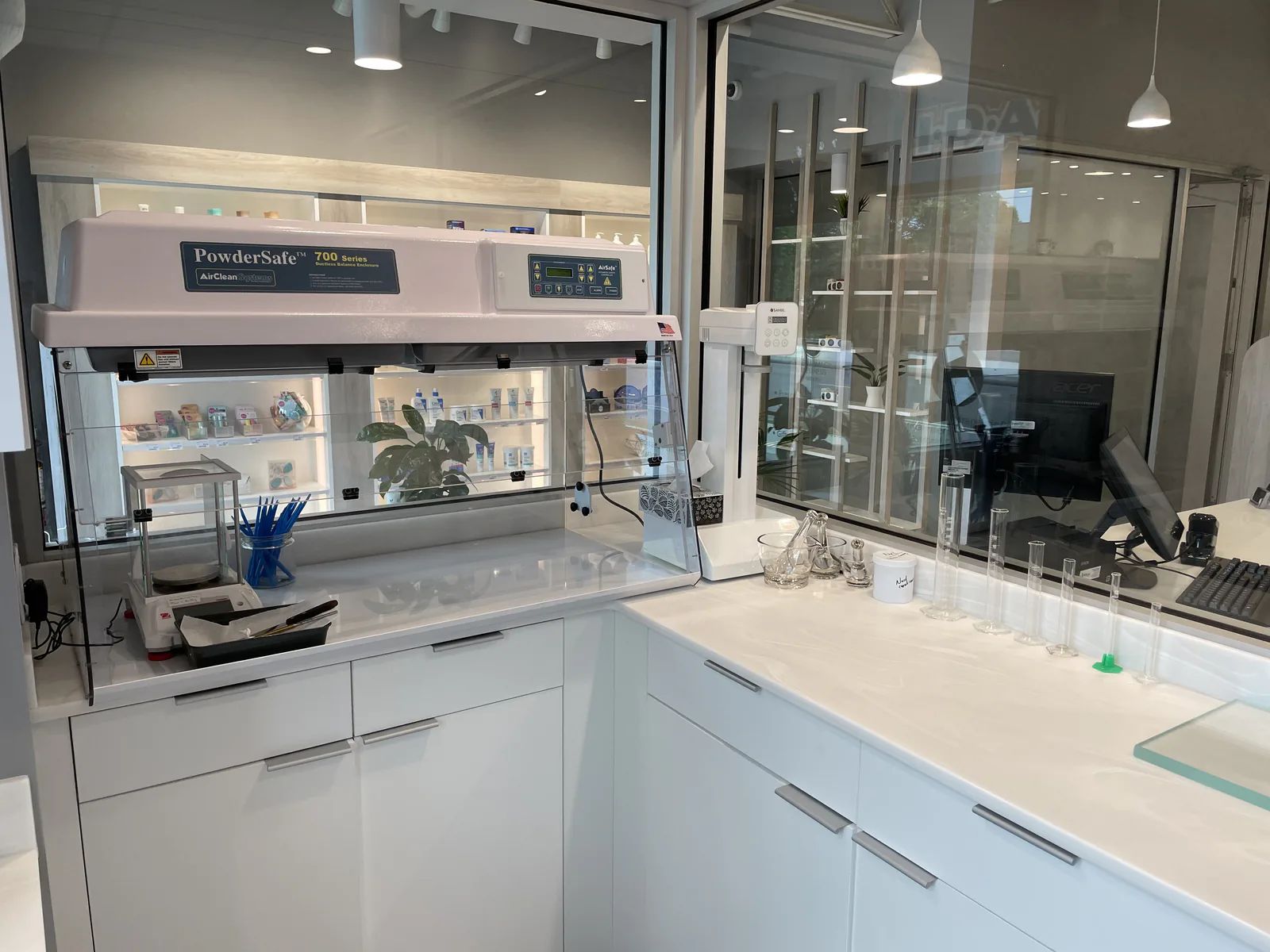
When your prescription arrives at Kiwi, our pharmacist checks what you need and calls your prescriber if anything needs clarifying. In our Kelowna lab, the team follows a formula to measure the ingredients and prepare your medication. The pharmacy checks the finished preparation before you pick it up.
The workbench in the photo is just behind the glass at our Kelowna pharmacy. Kiwi is a member of Professional Compounding Centers of America (PCCA). PCCA develops formulas and offers training for pharmacy teams. A compounding formula lays out how much of each ingredient to use and how to put them together.
How long does it take to compound a prescription?
Timing depends on the prescription. Ask the pharmacy for a pickup estimate before you make the trip. If you’re down to your last few doses, tell the pharmacist how much you have left when you call.
At pickup, check where to keep the medication and how long you can use it. Even if the name on the label is familiar, a different form can have different storage instructions. If you’ll need more, ask when to call for a refill while you have the pharmacist in front of you.
Does PharmaCare cover compounded medication in B.C.?
Sometimes. BC PharmaCare has rules for compounded prescriptions. Some preparations qualify when specific criteria are met; others need approval before the medication is dispensed. Having a prescription alone doesn’t tell you what you’ll pay.
Ask for two numbers before the lab starts: the estimated price of the preparation and the amount you’d pay after any coverage. If you have private insurance, have your plan details handy. It’s a much more useful conversation to have then than at the till.
Contact Kiwi
Wondering whether your prescription comes in a different form or strength? Our Kelowna compounding team can check. Have the medication label handy and tell us what’s giving you trouble.
Call Kiwi Pharmacy at 778-940-1950 and ask to speak with a pharmacist.
This article is general educational information, not individual medical advice.