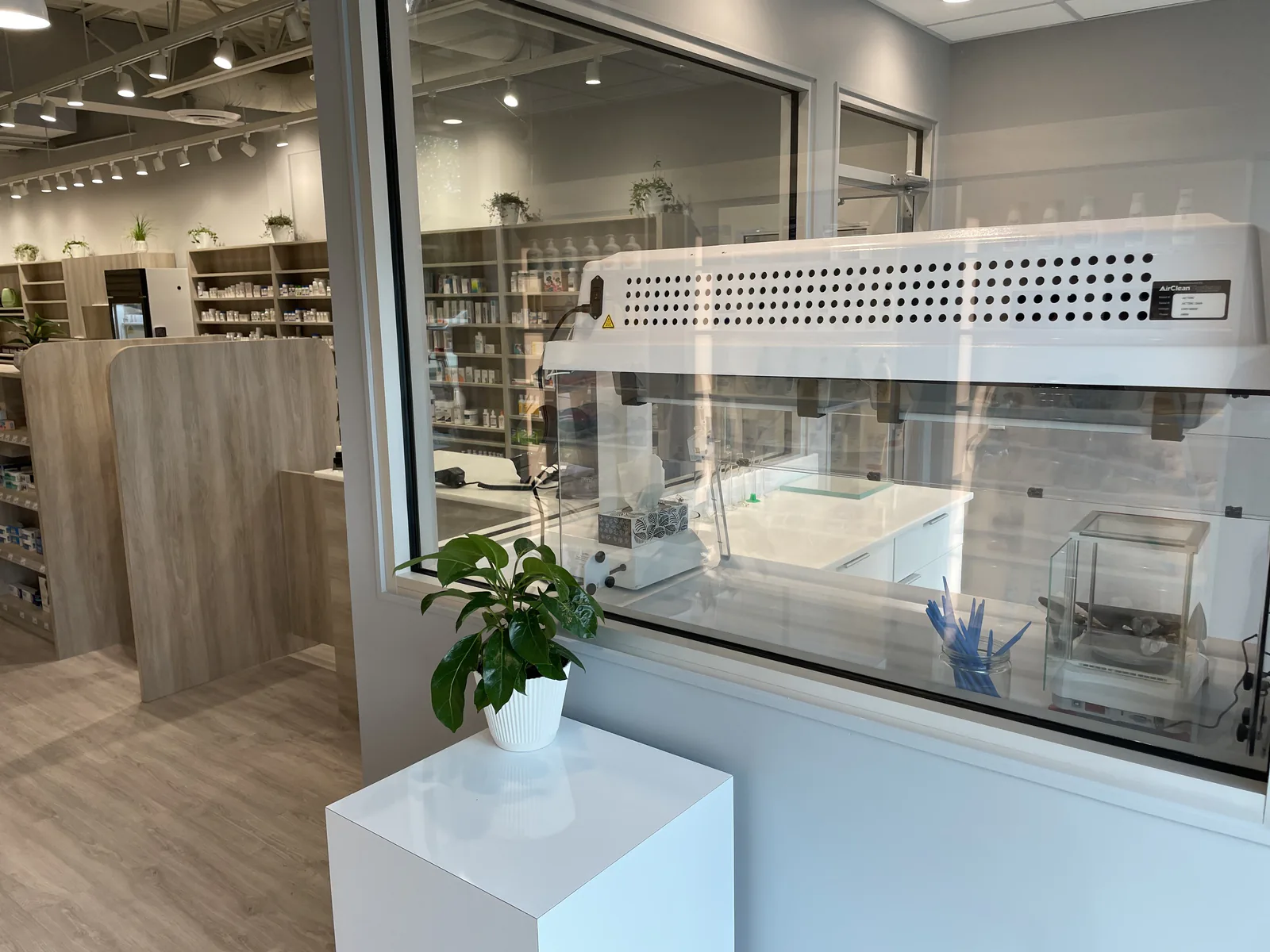
Compounding pharmacy in Kelowna
Custom medications prepared in our on-site lab, based on your prescription.
Read more: Compounding pharmacy in Kelowna Kiwi Pharmacy & Wellness
MEDICAL & AESTHETICS · Connected care
Hormone questions deserve time and a clear explanation. Learn about BHRT, talk with a qualified prescriber and understand where our pharmacy can help.

THE KIWI APPROACH
There’s a lot to sort through when you start reading about hormones.
At Kiwi, we start with what has changed for you, what you want to understand and whether treatment makes sense.
Our medical and pharmacy teams have different roles, with care connected at our Clement Avenue location.
BHRT stands for bioidentical hormone replacement therapy. Bioidentical describes a hormone with the same molecular structure as one made by the body.
It does not mean a product must be compounded, is risk-free or is more effective than a standard medication.
Perimenopause and menopause can bring changes in sleep, periods and day-to-day comfort. These are worth discussing, but not every change is caused by hormones.
Your clinician considers the broader picture before recommending treatment, another kind of support or further assessment.
Bring your questions and a clear picture of what you want help with. Your prescriber reviews your health history, current medicines and the benefits and risks of the options.
Testing is arranged when clinically appropriate, not automatically as the same panel for everyone.
Bioidentical hormones are available in manufactured medicines as well as compounded preparations. A custom preparation is not automatically the better choice.
Your prescriber and pharmacist consider whether an available medication meets your needs before discussing a specific reason for compounding.
When a compounded prescription is appropriate, our Kelowna lab can prepare the prescribed strength and form. Creams, capsules and troches, which are small dissolvable lozenges, are examples of preparation formats.
They are not interchangeable. Your pharmacist checks the prescription and explains its use, storage and refill arrangements privately.
Sleep, food, movement and stress matter too. The plan should fit your day-to-day life.
Ask which changes are worth focusing on and which questions belong with your clinician, pharmacist or another member of your care team.
The first prescription is not the end of the process. Your clinician reviews how things are going, checks for unwanted effects and reassesses whether treatment remains appropriate.
The pharmacy can help with medication questions and coordinate prescription changes with the prescriber.
Ask the clinic which appointment fits your question, what the consultation costs and what to bring. If you already have a prescription and need help with a preparation, speak directly with the pharmacy.
Testing is arranged when clinically appropriate. Your prescriber decides which tests, if any, are useful after reviewing your history and concerns.
No. Bioidentical hormones are available in manufactured medicines as well as compounded preparations. Your prescriber and pharmacist consider whether there is a specific reason for a custom preparation.
Your clinician reviews your response and any unwanted effects, then reassesses the plan. The pharmacy supports medication questions, refills and coordination of prescription changes.
Custom medications prepared in our on-site lab, based on your prescription.
Read more: Compounding pharmacy in Kelowna
Kiwi’s guide to everyday exposure questions and practical choices.
Read more: Everyday chemicals and hormone healthIndependent patient information from The Menopause Society.
Read the resource: Hormone therapy explainedSTART HERE